王WangSurname
Wáng
Wang (王) means 'king' and is the most common surname in China. It symbolizes royalty, leadership, and authority. Over 100 million people bear this surname.
Wáng
Mainland China · Taiwan
Wong
Guangdong · Hong Kong
Ong
Fujian · Taiwan · SE Asia
Vong
Meizhou · Taiwan · SE Asia
Population Ranking
#1
Estimated Over 101 million people
Position among top 100 Chinese surnames
Geographic Distribution
Henan, Shandong, Hebei, Sichuan
Five Element Analysis
Earth
stability, patience, and reliability
Origin & Evolution
From Chu State royalty to global diaspora — a 3,000-year journey
Zhou Dynasty
周朝·c. 1046 – 256 BC
Traced to Prince Jin, son of King Ling of Zhou. After the royal line fell, descendants adopted the surname Wang (王) — literally 'king' — to honor their royal ancestry.
Han Dynasty
汉朝·206 BC – 220 CE
Wang clans flourished across northern China. Wang Mang briefly seized the throne to found the Xin dynasty (9–23 CE), cementing the surname's political prestige.
Tang & Song
唐宋·618 – 1279
A cultural golden age — Wang Xizhi defined Chinese calligraphy, Wang Wei pioneered landscape poetry, and Wang Anshi launched the sweeping New Policies reform.
Ming & Qing
明清·1368 – 1912
Wang became the most common surname in northern China, with major branches across Shandong, Henan, Hebei, and Shanxi producing generations of scholars and officials.
Modern Era
现代·1912 – Today
Wang is now the most populous surname in China with over 100 million people, and one of the most common surnames globally.
Commandery
Taiyuan Commandery (太原郡) — Modern-day Taiyuan, Shanxi Province
Hall Title
三槐堂 (Hall of Three Scholar Trees)
Named after three scholar trees planted by Wang You during the Song Dynasty — symbolizing the family's aspiration that descendants would serve as high-ranking officials.
Ancestral Hall
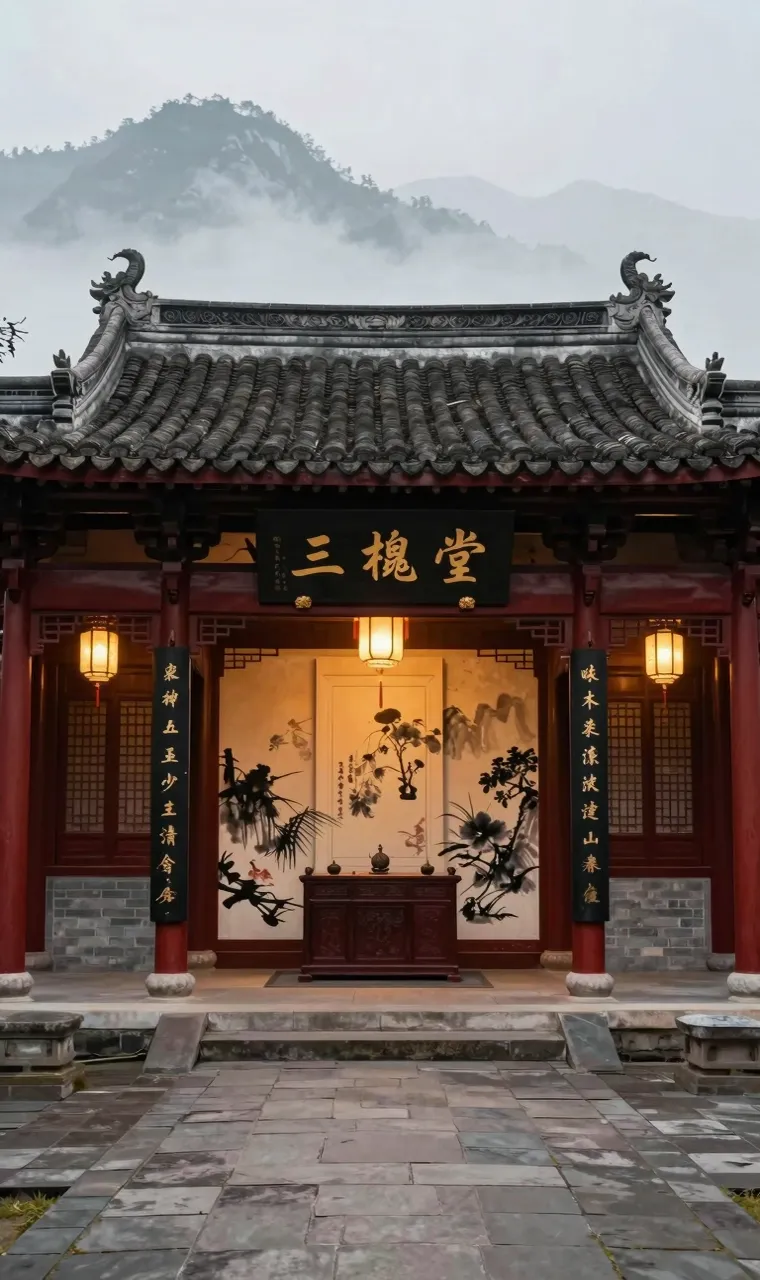
Wang Clan Ancestral Hall in Taiyuan, Shanxi — One of the most revered Wang clan halls, dating back to the Ming Dynasty. It honors the legendary Wang lineage from the State of Jin and serves as a pilgrimage site for Wang descendants worldwide.
Clan Motto & Family Tradition
忠厚传家久,诗书继世长 — Loyalty and kindness pass down through generations; poetry and learning endure through the ages.
Famous People with Surname Wang
Wang Xizhi
王羲之
303 – 361
CalligrapherKnown as the 'Sage of Calligraphy', his Orchid Pavilion Preface remains the most revered work in Chinese calligraphic history.
Wang Anshi
王安石
1021 – 1086
Statesman & PoetNorthern Song chancellor whose New Policies reformed taxation, education, and the military; also one of the Eight Great Prose Masters.
Wang Yangming
王阳明
1472 – 1529
PhilosopherFounder of the School of Mind, his doctrine of 'unity of knowledge and action' reshaped Neo-Confucianism across East Asia.
Tone Compatibility
Wang (Wáng) is a 2nd tone (rising) surname. In Chinese naming, balanced tonal patterns create harmonious-sounding names.
Recommended Patterns
peaceful and secure
vast and auspicious
ambition that soars
Patterns to Avoid
Each digit is a tone (1=level, 2=rising, 3=dipping, 4=falling). The first is the surname tone; the next two are the given name's tones.
Example Names with Wang
Your Wang Family Legend
Popular Chinese Name Collections
Want Your Own Unique Chinese Name?
Our engine creates personalized names based on your English name and preferred style.
Try the Name Generator→Frequently Asked Questions
What does the surname Wang mean in Chinese?
The surname Wang (王) literally means 'king' or 'monarch'. Its character depicts a ruler with three horizontal lines representing heaven, earth, and humanity, connected by a vertical line symbolizing the ruler's authority. As the most common surname in China, Wang embodies leadership, power, and a regal bearing, reflecting its royal origins.
Where does the Wang surname originate from?
The Wang surname has multiple origins. One major source comes from descendants of ancient kings who adopted Wang as their surname to signify their royal lineage. Another branch originated from the royal family of the Zhou Dynasty, particularly from Prince Jin (太子晋), whose descendants took the name Wang. Additionally, some non-Han ethnic groups adopted Wang during assimilation.
Who are some famous people with the surname Wang?
Wang Wei (701–761), a Tang Dynasty poet, painter, and musician known for his landscape poetry. Wang Anshi (1021–1086), a Song Dynasty reformer and prime minister. Wang Zhaojun (1st century BC), one of the Four Beauties of ancient China, known for her diplomatic marriage. Wang Leehom (born 1976), a Taiwanese-American singer-songwriter and actor.
What given names go well with the surname Wang?
Given names for Wang often reflect its royal and authoritative nature. Names like Wang Hao (浩, 'vast') or Wang Long (龙, 'dragon') evoke grandeur. For a balanced approach, Wang Li (丽, 'beautiful') or Wang Xin (欣, 'joy') soften the surname's power. Avoid overly humble names, as Wang's kingly connotation pairs best with strong or elegant characters.